Hyperthyroidism in Cats
Hyperthyroidism is the most common hormonal (endocrine) disease seen in older cats. It occurs when the thyroid gland becomes overactive and produces excessive amounts of thyroid hormone.
The Role of the Thyroid in Cats
The thyroid is a small gland located in your cat’s neck. Although tiny, it plays a very important role in the body.
The thyroid produces hormones that regulate metabolism — essentially controlling how quickly your cat’s body uses energy. Thyroid hormones also support mental alertness, nerve function, heart health, and skin and coat quality.
Hyperthyroidism is the most common hormonal (endocrine) disease seen in older cats. It occurs when the thyroid gland becomes overactive and produces excessive amounts of thyroid hormone.
What Are the Signs of Hyperthyroidism?
Hyperthyroidism is most commonly diagnosed in cats over eight years of age.
Signs you may notice at home include:
- Weight loss despite a good or increased appetite
- Increased hunger
- Hyperactivity, restlessness, or increased vocalisation
- Increased thirst and urination
- Vomiting and/or diarrhoea
- A dull, unkempt coat
During a consultation, your veterinarian may detect an increased heart rate, a heart murmur, or high blood pressure. In many cases, the thyroid gland can be felt as enlarged in the neck. If hyperthyroidism is suspected, diagnosis is confirmed with a simple blood test.
Treatment Options
There are several effective treatment options available. The most appropriate choice depends on your cat’s age, overall health, the presence of other conditions (such as kidney or heart disease), and your household circumstances. We will always discuss these factors carefully with you.
Anti-Thyroid Medication
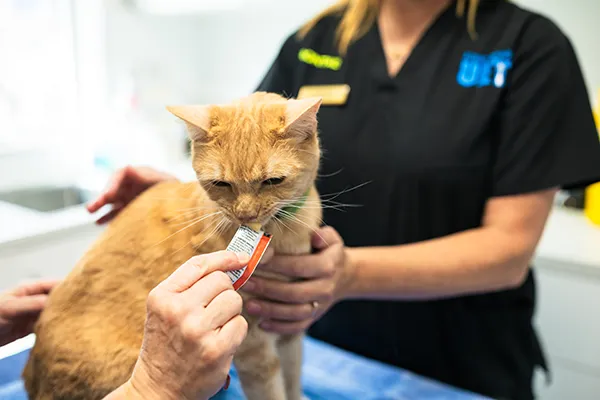
Medication can be given as a tablet or as a transdermal gel applied to the inside of the ear. This treatment controls the disease but does not cure it. It is often an economical and practical option. Side effects are usually mild and temporary, but regular blood tests are required to monitor thyroid levels and overall health.
Surgical Removal of the Thyroid Gland
Surgical removal can be curative. However, it requires a general anaesthetic, which may carry increased risk in cats with underlying heart or kidney disease. Many cats are stabilised with medication prior to surgery to improve heart rate and blood pressure. Potential surgical risks include damage to nearby nerves or the parathyroid glands, which regulate calcium levels.
Radioactive Iodine Therapy
Radioactive iodine treatment is considered the gold standard and is usually curative. The iodine is administered and selectively destroys abnormal thyroid tissue while preserving normal tissue.
Considerations:
- Requires referral to a specialist facility
- Hospitalisation for 1–2 weeks
- Higher upfront cost
- Not suitable for some cats with concurrent disease
Advantages:
- Generally curative
- No ongoing medication required
While we do not perform radioactive iodine therapy at Elgar Road Vet, we are happy to assist with referral if this is the best option for your cat.
Elgar Road Veterinary
Concerned About Your Cat?
If your cat is showing any of the signs listed above, early diagnosis can make a significant difference to long-term health and quality of life.
Please contact the team at Elgar Road Vet on (03) 9899 9518 to book a consultation with one of our veterinarians. We’re here to help you make the best decision for your cat’s ongoing wellbeing.