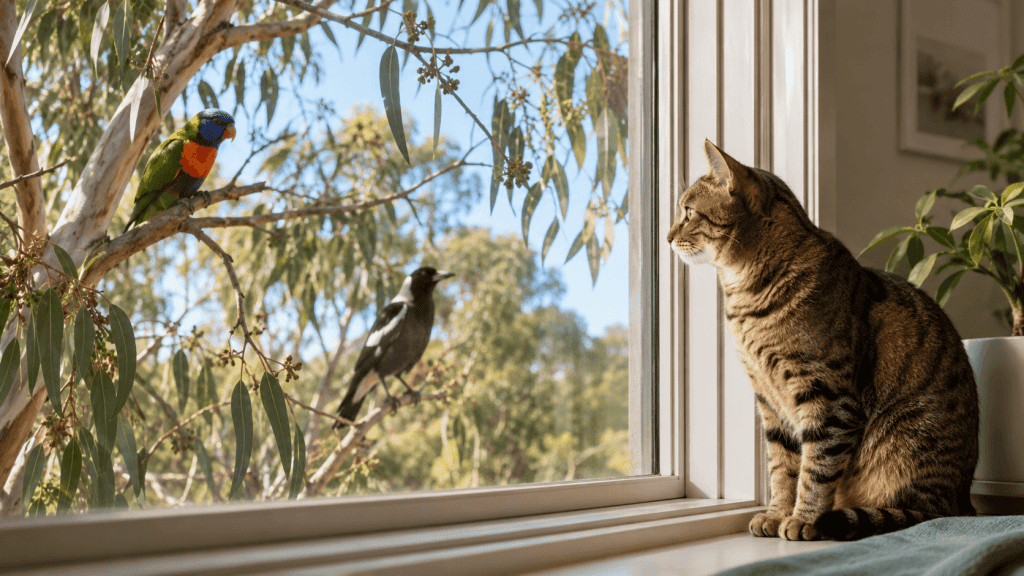
H5 avian influenza, commonly known as bird flu, is a serious viral disease that primarily affects birds but can occasionally infect mammals, including cats. H5 bird flu has now been detected in wild birds in Australia, so it is something cat owners should be aware of, particularly those with cats that can access outdoors.
How can cats become infected?
Cats are most likely to be exposed through close contact with infected birds or other animals, particularly if they hunt, catch or eat birds. Overseas, H5 infection in cats has also been associated with consumption of raw pet food and unpasteurised milk.
For this reason, we recommend keeping cats indoors or preventing them from hunting and interacting with wild birds. Avoid feeding raw meat or raw pet food, particularly products containing poultry or other potentially susceptible animal products, and do not give cats unpasteurised milk.
If you keep backyard chickens or other poultry, it is particularly important to prevent contact between your birds and wild birds and to maintain good biosecurity around the coop, food, water and equipment. This also helps reduce opportunities for your cat to come into contact with potentially infected poultry or contaminated areas.
What signs should I look for?
Signs of H5 infection in cats can include lethargy, reduced appetite, fever, eye or nasal discharge, respiratory disease and neurological signs such as tremors, seizures, incoordination or blindness. These signs can occur with many other conditions, so they do not necessarily mean your cat has bird flu.
If your cat becomes unwell after contact with a sick or dead bird, wildlife or potentially contaminated food, please contact us before bringing your cat into the clinic. We can advise you on the safest way to have your cat assessed.
H5 bird flu is a notifiable animal disease in Australia. If we suspect infection, we will follow the appropriate veterinary biosecurity and reporting procedures.
The best protection is simple: keep cats away from wild birds and wildlife, avoid raw diets and unpasteurised milk, and maintain good biosecurity around backyard poultry.